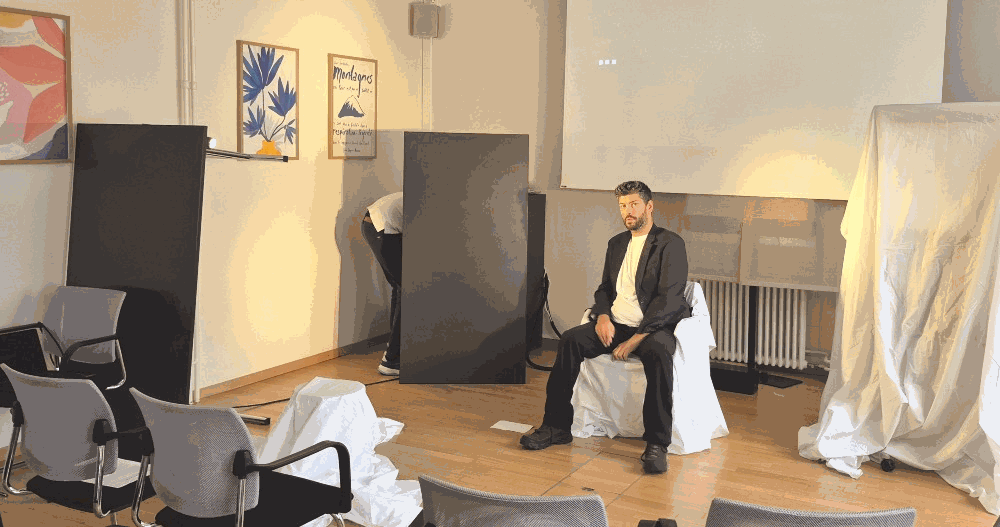
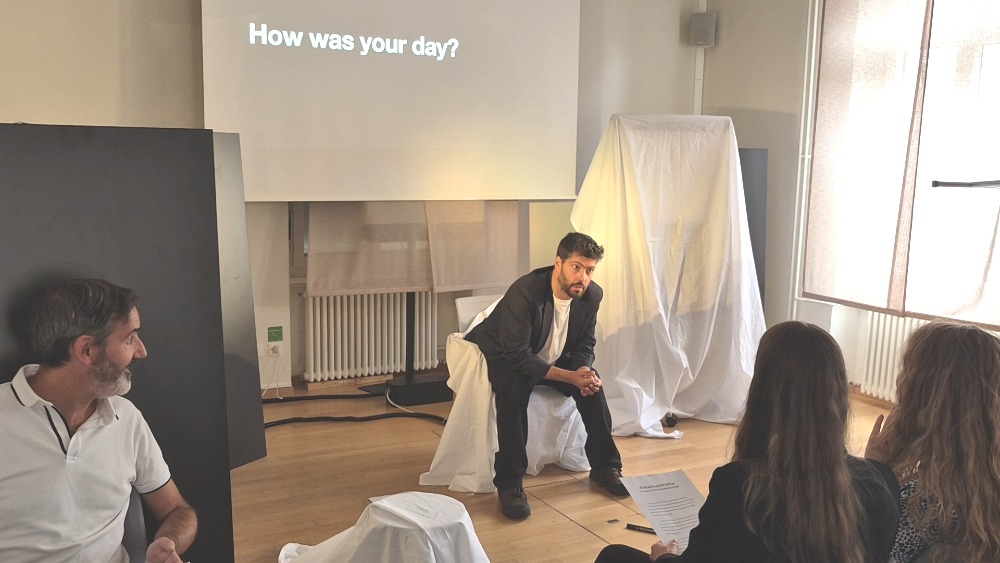
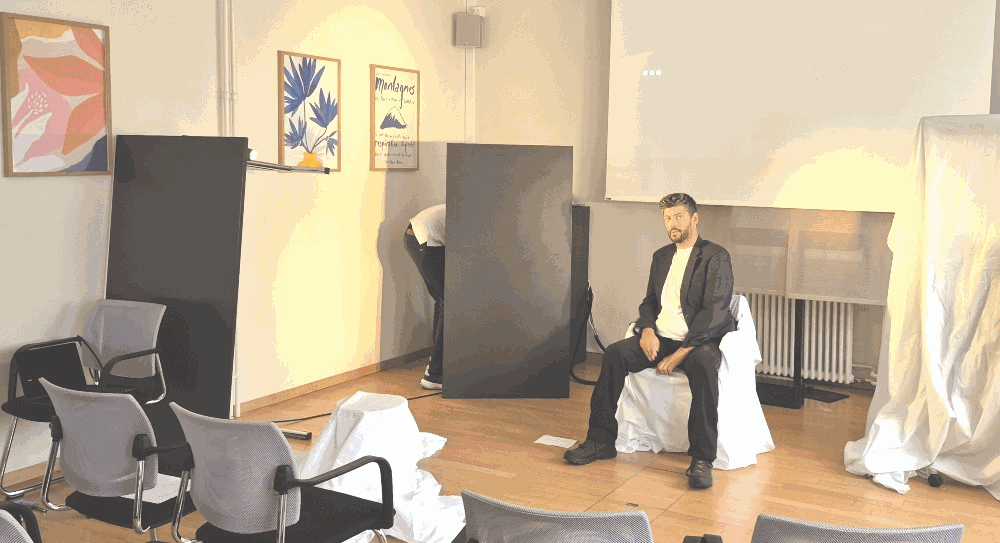
One of the most striking moments of the Lausanne Symposium came not from a lecture hall, but from a transformed meeting room-turned-stage, where actor and creator José-Miguel (Zé) Figueiredo performed his boundary-pushing work "If I Reach Korea I'll Tell You." This intimate Teatro do Zero production offered something rare in both theatre and scientific gatherings: a raw, immersive act of creation that refused easy categorisation or comfortable distance.
As director Mauro Corage writes, "It is not a play about the disease, but the disease is present. It is not an autobiography, but it carries traces of intimate and everyday experiences. It is not a manifesto, but it is, inevitably, a political gesture." What unfolded was not spectacle, but truth, expressed through silence, gesture, vulnerability, and the kind of presence that demands we reconsider what bodies are capable of and what voices deserve to be heard.
Zé, who lives with VPS13A disease, is on stage because he is an artist and a creator with important questions to ask. The performance rejects elaborate props or visual distractions, working instead with what Mauro calls "the cruelty of simplicity." Through failures, pauses, and everything that is often hidden from the stage, Zé invites us into a space where difference is not an obstacle but a creative force.
"At a time when many performers and formats blur into repetition, the presence of a truly different body is a breath of fresh air," Mauro explains. "Not as exotica. Not out of pity. But for the courage to open new possibilities for creation."
The performance reminded us that the body is not just a subject of science, but a force of expression. That art, at its most honest, is a place where truth can be felt, not just understood. For Zé, theatre and other art-based therapies form part of his wellbeing regime, developed alongside his friend and director, Mauro. It's a powerful example of how creativity can be both therapeutic and transformative, for the artist and the audience alike.
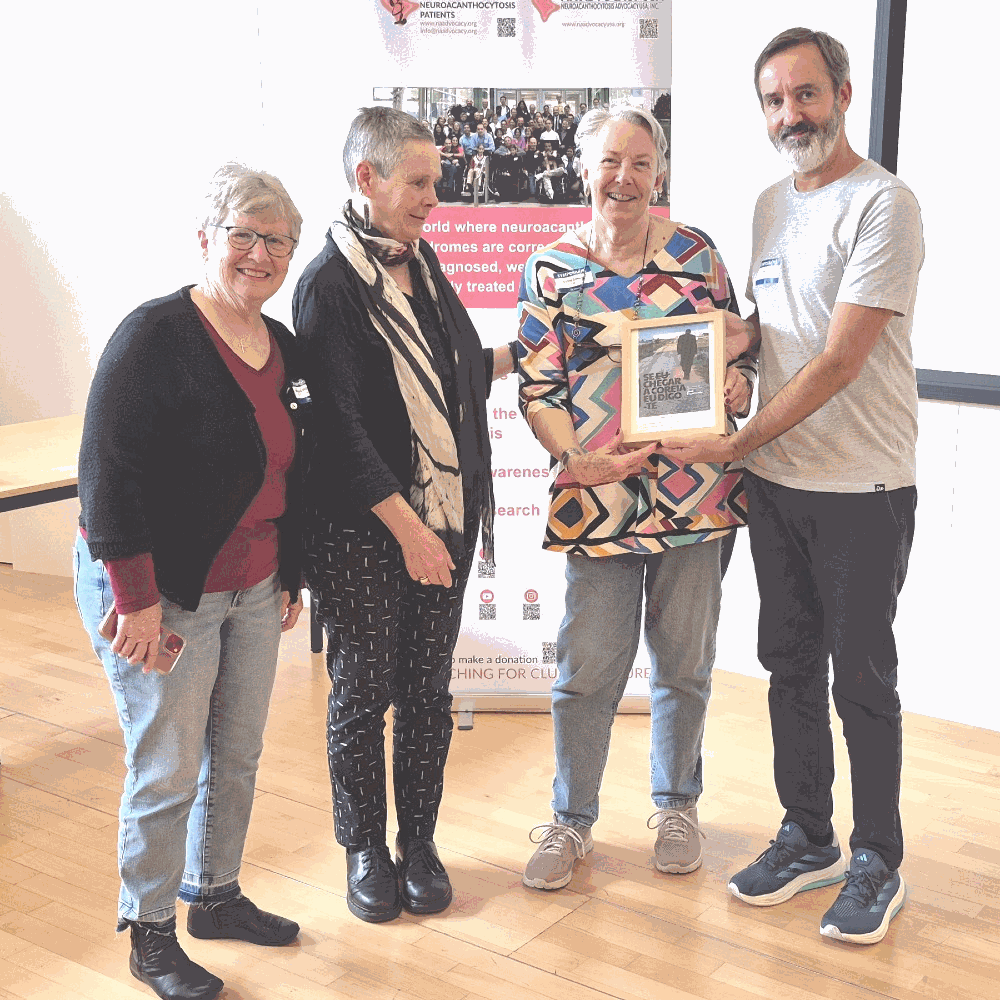
While we recorded the performance, we don't have the rights to share it publicly. If you'd like to watch it, please email info@naadvocacy.org to request a link, but please do not distribute it further. We're grateful to have witnessed this remarkable work and to Zé for his courage in asking difficult questions about who gets to be seen, heard, and valued in art and in society.


 Like
Like

