We all hope to leave something meaningful behind. For some, that legacy is found in treasured family traditions, cherished memories, or the values passed from one generation to the next. For others, it includes making a lasting difference in the causes and communities they care about most.
Planned giving offers a unique opportunity to do both.
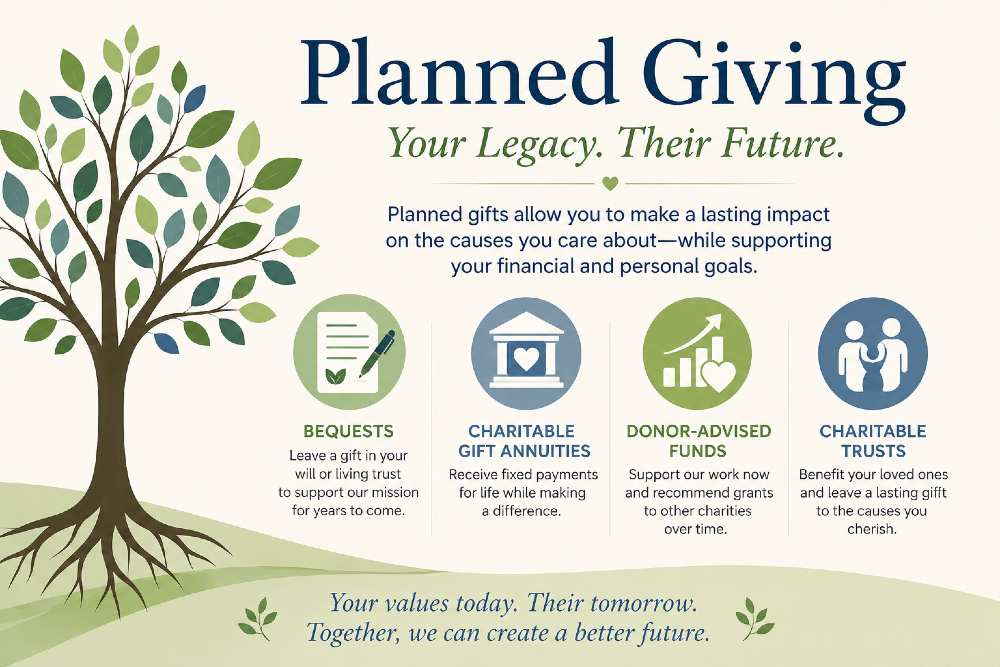
By including a charitable organization in your estate or financial plans, you can create a legacy that extends far beyond your lifetime while helping ensure that vital programs and services continue to thrive for future generations. Planned gifts allow individuals and families to support a mission they believe in while also addressing personal financial, tax, and estate planning goals.
More Than a Gift, A Lasting Legacy
Planned giving is the process of integrating charitable giving into your overall financial and estate plans. Unlike annual donations, many planned gifts take effect in the future, allowing you to make a significant charitable contribution without affecting your current financial security.
For many donors, planned giving represents an opportunity to transform their values into lasting action. It allows them to touch the lives of others, support causes that have shaped their lives, and create meaningful outcomes that will continue long after they are gone.
Just as importantly, planned gifts are often flexible and can be tailored to meet individual goals. Whether your priority is supporting family members, reducing taxes, generating lifetime income, or strengthening a favorite nonprofit organization, there are giving options available to help achieve those objectives.
The Simplicity and Power of a Bequest
One of the most popular forms of planned giving is a charitable bequest.
A bequest is a gift made through a will or trust that directs assets to a charitable organization after your lifetime. Because it can be established through a simple update to existing estate planning documents, a bequest is often considered one of the easiest and most accessible planned gifts.
A bequest can take many forms, including:
- A specific dollar amount
- A percentage of your estate
- Particular assets such as real estate, artwork, investments, or personal property
- A gift from the remaining balance of an estate after other distributions have been made
Many donors appreciate that a bequest costs nothing during their lifetime and remains completely revocable, meaning plans can be changed if circumstances evolve. Charitable bequests may also provide estate tax advantages while allowing donors to continue supporting loved ones and heirs.
Other Meaningful Ways to Give
Planned giving extends far beyond a will or trust. In fact, some of the simplest gifts require only the completion of a beneficiary designation form.
Beneficiary Designations
Retirement accounts, life insurance policies, investment accounts, bank accounts, and annuities can all be used to support charitable causes through beneficiary designations. These gifts are often easy to arrange, avoid probate, and may offer significant tax savings for an estate. Because beneficiary designations can generally be updated at any time, they also provide valuable flexibility.
Gifts of Appreciated Assets
Stocks, mutual funds, and other investments that have increased in value can be powerful charitable gifts. Donating appreciated assets may provide tax benefits while allowing donors to support a mission they care deeply about.
Charitable Gift Annuities
For donors seeking supplemental income, a charitable gift annuity can provide fixed payments for life in exchange for an irrevocable gift. These arrangements offer predictable income while creating a future charitable legacy.
Charitable Remainder Trusts
Charitable remainder trusts allow donors to transfer assets into a trust that provides income to the donor or beneficiaries for a period of time, with the remaining assets eventually benefiting charity. These arrangements can provide income, reduce taxes, and support important causes.
Why Endowment Giving Matters
Many planned gifts are directed to endowment funds, which provide a permanent source of support for nonprofit organizations.
An endowment is designed to preserve the original gift while using a portion of its annual earnings to fund programs, services, and community needs. Because the principal remains intact, endowment gifts continue generating support year after year, often for generations.
Unlike annual contributions that are typically used within a single year, endowment gifts create a perpetual source of funding that strengthens an organization's long-term stability and sustainability. A donor's generosity can continue working decades into the future, helping ensure that important services remain available to the community.
For many families, establishing a named endowment fund is also a meaningful way to honor a loved one, celebrate family values, or recognize a cause that has had a profound impact on their lives.
Leaving Your Mark on the Future
Every legacy begins with a single decision: choosing what matters most.
Whether through a bequest, beneficiary designation, life insurance gift, charitable trust, endowment contribution, or another planned giving vehicle, donors have the opportunity to transform today's values into tomorrow's impact. Planned giving provides a way to care for loved ones, strengthen communities, and support important missions for generations to come.
No matter the size of the gift, the result is the same: a lasting investment in the future and a meaningful expression of the life, values, and causes that matter most.
To learn more about planned giving opportunities, consult your financial advisor, estate planning attorney, or local community foundation to explore options that align with your charitable goals and financial plans.