We’re now delighted to share that this work has been published in Acta Neuropathologica Communications. The findings offer valuable insight into the disease process — and even a glimmer of hope for future treatments.
What did they discover?
Using a specially developed VPS13A disease mouse model, the research team found that muscles without the VPS13A gene show signs of stress, inflammation, and difficulty clearing waste proteins — changes that closely resemble early muscle aging. The affected muscle cells also had trouble maintaining energy and overall health.
This may help explain why some people with VPS13A disease begin to experience muscle weakness at an early stage, even before more classic neurological symptoms appear.
And there’s more good news...
When the team treated the mice with rapamycin (a drug already approved for use in other settings), they observed a partial restoration of muscle cell health, a promising early step that may help guide future therapeutic development.
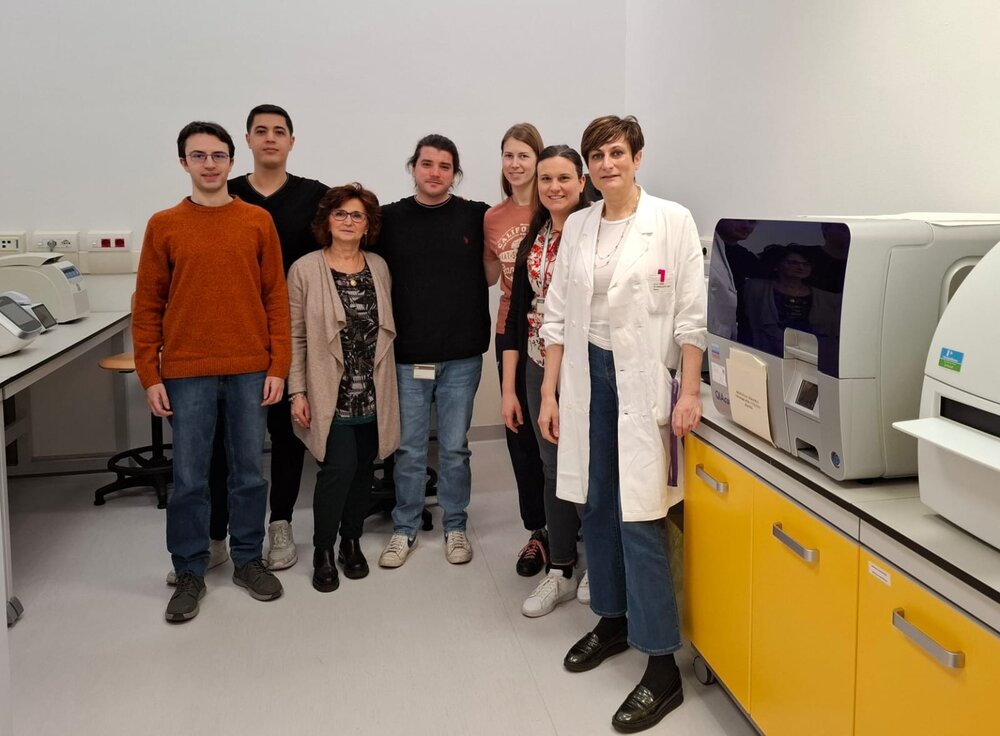
The study was led by Professor De Franceschi (pictured, far right) and first authored by Veronica Riccardi (third from the right).
We’re proud to say that this research was supported in part by Advocacy for Neuroacanthocytosis Patients and NA Advocacy USA, which funded the maintenance of the VPS13A disease mouse model used in the study.
Read the full paper here: actaneurocomms.biomedcentral.com/articles/10.1186/s40478-025-00569-8.
Thank you to the research team in Verona and to everyone who supports our work, your donations make it possible to fund studies like this, which bring us one step closer to understanding (and eventually treating) our ultra-rare conditions.


 Like
Like

