We are pleased to share an update on the Research Advisory Committee (RAC), which continues to play a vital role in guiding the scientific direction of Advocacy for Neuroacanthocytosis Patients and NA Advocacy USA.
The RAC provides scientific and strategic guidance to ensure that all research supported by the charities is ethical, high quality, and aligned with the needs and priorities of individuals affected by neuroacanthocytosis (NA) syndromes. This work is essential in a field where progress depends on strong international collaboration and shared expertise.
Before introducing our new members, we want to express our sincere thanks to the RAC members whose terms have recently come to an end. Their expertise, generosity, and long‑standing commitment have shaped our research strategy for many years.
Professor Emeritus Adrian Danek, a central figure in the global NA community, contributing not only his scientific expertise but also his long‑standing personal commitment to our cause. He is a renowned neurologist and he has played a pivotal role in advancing understanding of NA mechanisms. He is also now a trustee of Advocacy for Neuroacanthocytosis Patients, offering invaluable guidance and continuity to our work. His contributions have strengthened our global research relationships, supported thoughtful decision‑making, and ensured that patient experience remained central to every discussion. We are deeply grateful for his service.
Our heartfelt thanks to Professor Mark Walterfang, Consultant Neuropsychiatrist at the Royal Melbourne Hospital, Australia and Professor Volker Haucke, Professor of Molecular Pharmacology at
Leibniz Institut für Molekulare Pharmakologie, Berlin, Germany, who kindly served as Committee members and generously shared their insights and expertise.
We are delighted to welcome Professor Emerita Roberta Fuller and Professor Aaron Neiman who join Professor Ruth Walker. Each Member brings deep scientific and clinical expertise, along with a strong commitment to improving the lives of people affected by NA syndromes.
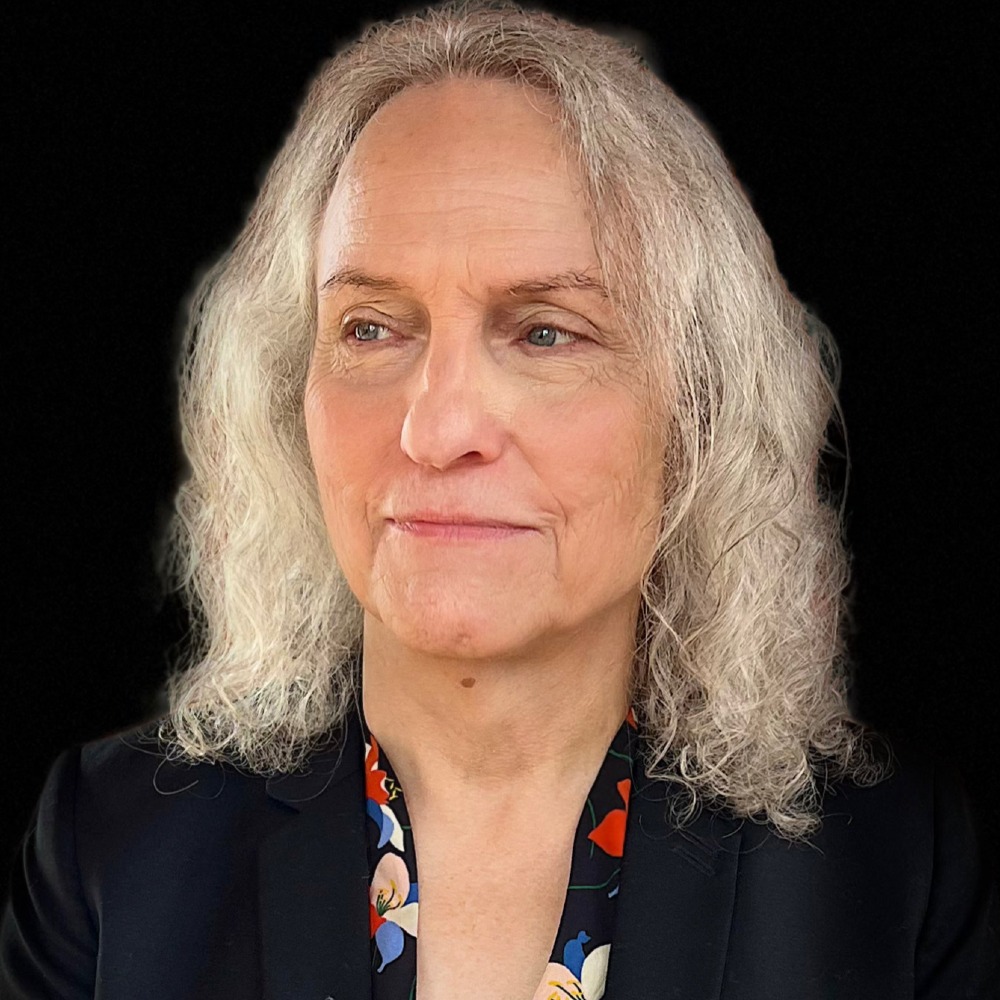 Roberta Fuller
Emerita Professor of Biological Chemistry, University of Michigan, Ann Arbor
BS Molecular Biophysics and Biochemistry Yale University 1978
PhD Biochemistry Stanford University 1984
Postdoctoral Biochemistry 1984-1987 University of California, Berkeley
Assistant Professor Biochemistry Stanford University 1987-1994
Professor Biological Chemistry University of Michigan, Ann Arbor (Associate 1994-1999, Full 1999-2021; retired active emerita 2021)
My interest in biochemistry had its origins in a book from a knock-off bin, given to me when I was in middle school, on the Molecular Basis of Evolution by Christian Anfinsen. I didn’t understand much of what I read but I gathered that a great deal more was known about living things than I had imagined and that DNA and genes were at the center of it all. As an undergraduate, I was fortunate to receive training in RNA research by Terry Platt at Yale and went on to Stanford for graduate work on the initiation of DNA replication and the role of the DnaA protein with Arthur Kornberg. In my postdoctoral work at Berkeley with Jeremy Thorner, I learned about the benefits of yeast as a model system for understanding the eukaryotic cell. My independent lab at Stanford and later Michigan depended on a wonderful group of graduate students and postdoctoral fellows. Together, we made contributions to understanding the proteolytic processing of precursors of secreted peptides and secretory proteins, and the mechanisms of organization of late compartments of the secretory pathway. It was during this latter work that PhD student Jason Brickner identified the SOI1 gene, which we found to be allelic with VPS13. The homology between the sequence Dr. Brickner obtained for VPS13 later served as a clue in understanding the Chorea Acanthocytosis protein when the ChAC locus was itself cloned.
In the latter part of my academic career, I served as the director of The Cellular and Molecular Biology PhD program at Michigan for a number of years and as a member of the NIH T32 Training program study section. Since retirement, I have spent some time as a volunteer researcher in the lab of Josie Clowney in Molecular, Cell and Developmental Biology at Michigan. Her lab studies the transcriptional regulation of neural development in fruit flies, especially in relation to memory and sexual dimorphism.
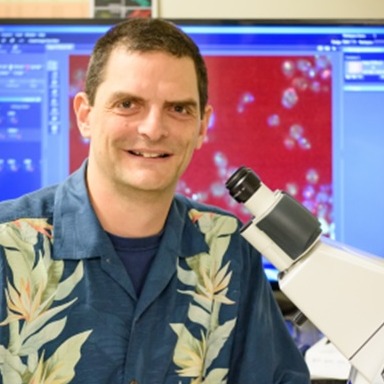
Aaron M. Neiman
Professor, Department of Biochemistry and Cell Biology
Stony Brook University
Aaron received his Ph.D from
University of California San Francisco (UCSF), conducting his studies in the laboratory of Ira Herskowitz. After postdoctoral training with Rolf Sternglanz at Stony Brook University, he joined the faculty at Stony Brook in 1999. Aaron is a Fellow of the American Academy of Microbiology and serves as the Cell Biology, Metabolism, and Physiology Section Editor-in-Chief for the Journal of Fungi.
The Neiman lab has spent the last 25 years investigating the process of spore formation in the yeast Saccharomyces cerevisiae as a model system to explore the molecular mechanisms by which cells rearrange their organization during differentiation.
One particular interest in the lab is the VPS13 protein. Spore formation in yeast requires lipid transfer by VPS13 between the endoplasmic reticulum and another intracellular membrane. This simple model allows us to explore the mechanism and regulation of VPS13. Because of the strong conservation of VPS13 proteins, the findings in yeast have direct implications for the function of the human proteins.
I was fortunate to receive support from the NA Advocacy at a critical juncture early in our VPS13 studies and am delighted to have the opportunity to support their efforts.
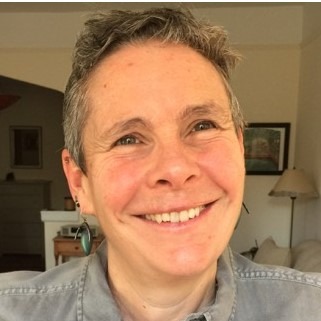 Ruth H. Walker
MD, PhD
Professor, Department of Neurology at Mount Sinai School of Medicine, New York
Ruth H. Walker obtained her medical degree and PhD from the University of Edinburgh, Scotland. She completed her neurology residency at New York University School of Medicine and a fellowship in Movement Disorders at Mount Sinai School of Medicine. She is Director of the Movement Disorders Clinic at the James J. Peters Veterans’ Affairs Medical Center in the Bronx, and is Professor in the Department of Neurology at Mount Sinai School of Medicine in New York City.
Dr. Walker’s research focuses on functional neuroanatomy and neurochemistry of the basal ganglia and clinicopathologic correlations of movement disorders.
She has a particular interest in the rare genetic choreas, especially the neuroacanthocytosis syndromes. This started during her movement disorders fellowship when she was involved with a family with an undiagnosed choreic disorder, and led to her becoming a part of the informal coalition of international NA researchers.
She has published and spoken extensively about these diseases, and is very involved with the neuroacanthocytosis patient community.
The combined experience of the RAC members spans neurology, genetics, movement disorders, rare disease research, and patient‑centred care. We look forward to working with them as they help guide the next phase of our research efforts.
The Committee exists to ensure that every research effort is meaningful, responsible, and aligned with patient needs. We are excited to continue this important work and the members’ dedication, insight, and international collaboration remain central to our mission of accelerating understanding, improving care, and ultimately searching for clues to a cure.


 Like
Like

